Nasal and sinus cancers represent less than 5% of all head and neck malignancies worldwide, yet they pose unique diagnostic and treatment challenges that have driven significant advances in oncology care. In the United Arab Emirates, where healthcare infrastructure has evolved rapidly over the past decade, these rare cancers have become a focal point for multidisciplinary innovation—bringing together oncologists, rhinologists, radiologists, and pathologists in ways that benefit patients across cancer specialties.
The complexity of treating tumors in the nasal cavity and paranasal sinuses has accelerated the adoption of precision medicine approaches, advanced imaging technologies, and minimally invasive surgical techniques that are now being applied to other cancer types. Understanding how these developments intersect with broader healthcare trends reveals important lessons for patients navigating cancer diagnosis and treatment.
The Diagnostic Challenge of Sinonasal Malignancies
Nasal and sinus cancers are notoriously difficult to detect in early stages. Symptoms like persistent nasal congestion, bloody discharge, facial pain, or chronic sinusitis mimic common benign conditions, leading to delayed diagnosis. By the time many patients receive a cancer diagnosis, the tumor has often grown into surrounding structures—the orbit, skull base, or brain—requiring complex surgical planning and coordinated care.
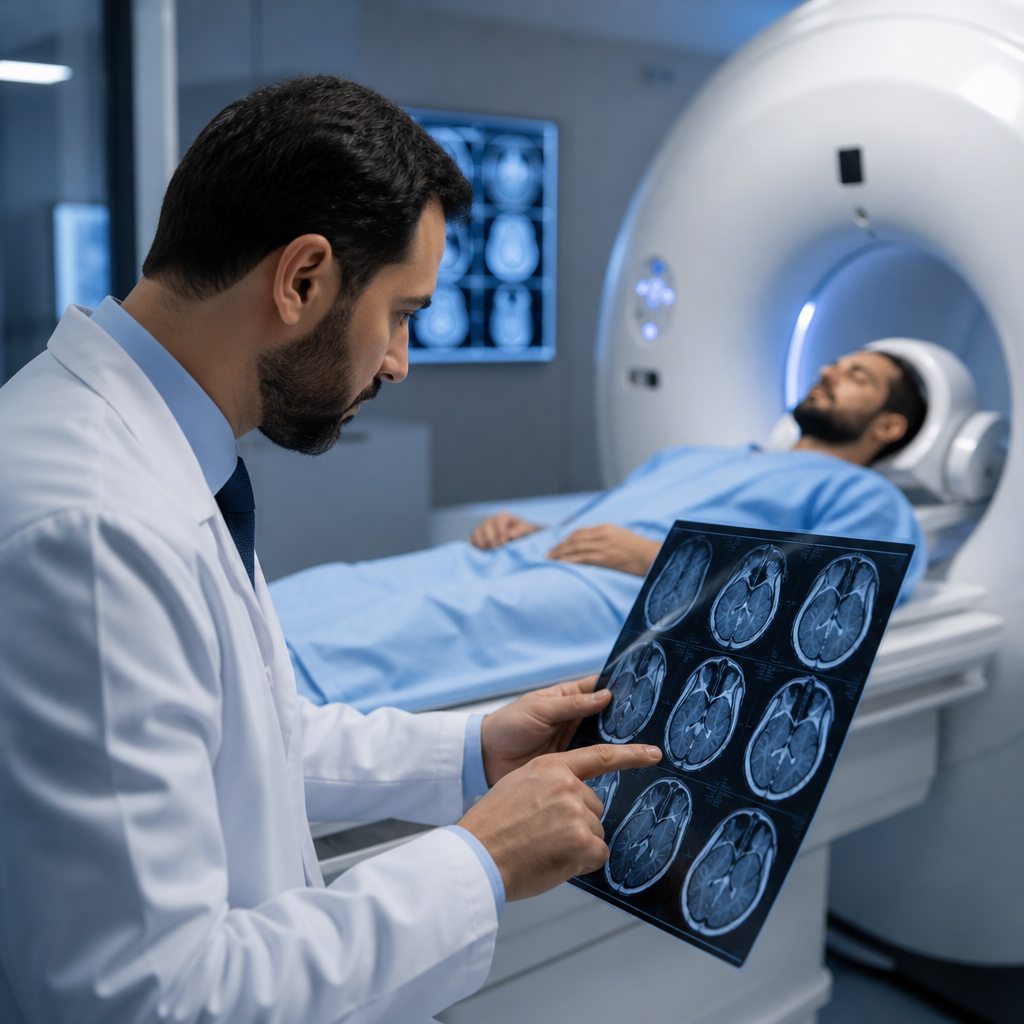
This diagnostic difficulty has pushed medical centers in the region to invest heavily in advanced imaging modalities. High-resolution CT scans and MRI sequences can now differentiate between inflammatory tissue and malignant growth with greater accuracy. PET-CT scanning has become standard for staging these tumors, helping oncology teams determine whether cancer has spread to lymph nodes or distant sites. These imaging advances, developed partly in response to sinonasal cancer challenges, now benefit patients across all cancer types.
When Multiple Specialists Must Work as One Team
The anatomical location of nasal and sinus tumors demands true multidisciplinary collaboration. A surgical oncologist cannot operate in isolation when the tumor abuts the eye socket or extends toward the brain. Radiation oncologists must carefully plan beam angles to maximize tumor dose while protecting the optic nerves, brainstem, and other critical structures mere millimeters away. Medical oncologists evaluate whether systemic therapy can shrink the tumor before surgery or mop up microscopic disease afterward.
This necessity has driven the creation of tumor boards and integrated care pathways that serve as models for other cancer programs. Weekly meetings where specialists from different disciplines review cases together, debate treatment options, and reach consensus have become standard practice. The coordination required for sinonasal cancer care has influenced how institutions approach lung cancer, gastrointestinal malignancies, and other complex cases where multiple treatment modalities must be sequenced correctly.
The Role of Molecular Profiling
Sinonasal cancers comprise several histologic subtypes—squamous cell carcinoma, adenocarcinoma, melanoma, esthesioneuroblastoma, and others—each with different biological behaviors. This diversity has made molecular profiling particularly valuable. Genetic testing can identify actionable mutations or overexpressed proteins that predict response to targeted therapies. In some cases, immunotherapy has shown promise for tumors with high mutational burden or specific biomarkers.
The experience gained from profiling rare nasal tumors has refined laboratory workflows and interpretation skills that apply broadly across oncology. As peptide-based therapies and precision medicine approaches become more accessible, the infrastructure developed for rare cancers enables faster adoption of new treatments for common malignancies.
Surgical Innovation and Minimally Invasive Techniques
Two decades ago, removing a nasal or sinus tumor typically required external incisions—cutting through facial bones, leaving visible scars, and causing significant functional impairment. Endoscopic endonasal surgery changed this paradigm. Surgeons can now reach tumors through the nostrils using high-definition cameras and specialized instruments, removing cancerous tissue while preserving normal anatomy.
Cleveland Clinic Abu Dhabi’s Cancer Institute has integrated rhinology expertise with oncology care to address these challenging cases. For patients requiring Nose surgery in Abu Dhabi, the collaboration between head and neck surgical oncologists and rhinology specialists enables comprehensive tumor removal through minimally invasive approaches when anatomy permits. This multidisciplinary model ensures that cancer treatment goals are met while optimizing functional outcomes like breathing, smell, and facial appearance.
The surgical techniques refined for nasal tumors have influenced approaches to other cancers in confined anatomical spaces. Endoscopic and robotic platforms developed for skull base tumors now assist with thyroid cancer, early laryngeal cancer, and select lung nodules. The principle of achieving oncologic control with minimal disruption to quality of life has become a guiding philosophy across surgical oncology.
Radiation Therapy Precision in Sensitive Areas
Delivering curative radiation doses to nasal and sinus tumors while avoiding the eyes, optic nerves, and brain requires extreme precision. This need has driven adoption of intensity-modulated radiation therapy (IMRT) and proton beam therapy in the region. IMRT uses computer-controlled beam shaping to conform radiation dose tightly to the tumor, while proton therapy exploits the physical properties of proton particles to stop at a precise depth, sparing tissue beyond the target.
These technologies, initially justified by the demands of treating rare sinonasal cancers, now benefit patients with prostate cancer, pediatric tumors, and other malignancies where normal tissue sparing is critical. The treatment planning expertise and quality assurance protocols developed for challenging head and neck cases raise standards across radiation oncology departments.
Regional Healthcare Infrastructure and Cancer Care Excellence
The UAE’s investment in specialized cancer care reflects broader trends in Middle Eastern healthcare. Centers of excellence in Abu Dhabi have treated thousands of complex cases in recent years, building expertise in rare cancers and complicated presentations that require advanced diagnostics and coordinated treatment. This concentration of resources enables institutions to maintain the multidisciplinary teams and specialized equipment needed for optimal outcomes.
For patients with nasal and sinus cancers specifically, access to integrated programs that combine surgical expertise, advanced radiation planning, and medical oncology within a single institution eliminates delays and communication gaps that can compromise care quality. The same infrastructure supports patients across cancer types, from hematologic malignancies requiring cellular therapy to solid tumors needing genetic counseling and targeted treatment.
What Patients Should Know
If you or a family member faces a diagnosis of nasal or sinus cancer, seeking care at a center with true multidisciplinary expertise makes a measurable difference. Ask whether the institution holds regular tumor boards where your case will be reviewed by specialists from multiple disciplines. Inquire about access to advanced imaging like PET-CT and high-resolution MRI, molecular profiling of your tumor, and minimally invasive surgical options if surgery is recommended.
Understand that treatment may involve a sequence of therapies—perhaps chemotherapy to shrink the tumor, followed by surgery, then radiation to sterilize microscopic disease. Each phase requires expertise, and coordination between specialists determines whether transitions happen smoothly or involve frustrating delays. Palliative care and supportive services should be available throughout treatment, not only at end of life, to manage symptoms and maintain quality of life.
For rare cancers like sinonasal malignancies, the advances in diagnostic precision, surgical technique, and radiation delivery pioneered over the past decade have fundamentally improved outcomes. These innovations ripple outward, raising standards across oncology and creating infrastructure that serves patients with all cancer types. The ongoing evolution of cancer care in the UAE demonstrates how focusing on complex cases drives broader progress in healthcare quality and accessibility.
